

The Partnership Every Child Needs: Home, Church, & School

Children benefit when the most important adults in their lives are singing the same song. Home, church, and school each contribute a different part, but together they can offer a coherent message about truth, identity, responsibility, grace, and hope.
The home is the center of a child’s daily formation. Parents establish the rhythms, relationships, boundaries, and examples that children experience most consistently. Deuteronomy 6 describes God’s words being discussed at home, on the road, at bedtime, and in the morning. Spiritual formation is woven into ordinary family life.
The local church has a role no school can replace. The church gathers God’s people for worship, biblical teaching, prayer, service, and life across generations. Children need to know that Christianity is larger than their family and larger than their school. They belong to the body of Christ, where people of different ages, backgrounds, and gifts learn to serve one another.
A Christian school contributes sustained academic and relational formation. Students spend up to 17,000 hours with teachers and classmates! In this setting, faith can shape the way students investigate creation, read literature, understand history, compete in athletics, resolve conflict, and develop their gifts. The school reinforces a Christian vision while giving students regular opportunities to practice it.
Partnership does not mean those three institutions will always communicate perfectly or agree on every secondary matter. It does mean we approach one another with humility, charitable assumptions, and a shared concern for the child. When a question arises, direct and timely conversation is far healthier than allowing frustration or incomplete information to grow.
Parents strengthen this partnership when children hear them speak respectfully about teachers, pastors, and leaders. Respect doesn’t prevent honest concern; it shows children how Christians pursue clarity and resolution. Schools and churches likewise serve families best when they listen carefully, communicate clearly, and remember that parents know their children in ways schools or churches cannot.
No one part can carry the entire responsibility of forming a child. The home cannot outsource discipleship, the church cannot become optional, and the school cannot treat faith as a separate department. When these communities work together, children receive something increasingly rare: a consistent and credible vision of life under the lordship of Christ.
More Than A Meeting: Building Community, Growing Disciples

Parent-teacher conferences on November 6th will soon be here. These days are about much more than grades, academic progress, or classroom performance. They are an opportunity to strengthen one of the most important partnerships in education: the relationship between our teachers and families. We believe that education is rooted in the biblical call to “bring them up in the discipline and instruction of the Lord” (Ephesians 6:4) and our team at Calvary works alongside our families towards that end. When parents and teachers come together, we build relationships that are grounded in trust, encouragement, and a shared commitment to helping each child grow into the person God has created them to be.
Every child is uniquely created by God, with individual gifts, strengths, challenges, and opportunities for growth. Psalm 139:14 reminds us that we are “fearfully and wonderfully made.” These conferences provide a valuable opportunity to celebrate a student's achievements, recognize their God-given strengths, and honestly discuss areas where additional growth is needed. These conversations extend beyond academic success. Together, we can consider how a child is developing spiritually, socially, emotionally, and intellectually. Proverbs 27:17 tells us, “Iron sharpens iron, and one man sharpens another.” Through meaningful conversations, parents and teachers can encourage one another, share insights, and develop intentional ways to disciple and nurture each student.
Ultimately, our desire is for parent-teacher conferences to be an exercise that builds the muscle of connectedness. If these conferences can help build rhythms of connecting (even outside of official parent-teacher conferences) students win. When families and teachers work together, we are better equipped to guide students through challenges, celebrate their victories, and point them toward Christ in every area of life. Our mission is more effectively pursued when teachers and parents aren’t working independently but through a community united around a shared purpose. As we gather for conferences, our prayer is that these conversations deepen relationships, strengthen our partnership, and help us more intentionally prepare the next generation to know, love, and follow Jesus.
Who is Discipling Our Children?

Children are always being discipled. The word may sound formal, but discipleship simply describes formation under the influence of a teacher, community, or way of life. Every repeated voice and habit is teaching our children what deserves attention, what should be loved, and what kind of person they should become.
Parents are a child’s primary human influence, but they are not the only ones. Teachers, coaches, pastors, friends, YouTubers (that’s a newer one), singers/actors, and algorithms all compete for attention. Some influences are healthy, some are mixed, and some actively contradict a Christian understanding of life. The important question is not whether our children will be influenced; it is which influences will become trusted and formative.
Formation often happens quietly. A child may not remember a single lecture about gratitude, yet years of hearing parents give thanks can shape a grateful heart. In the same way, hundreds of videos built around comparison, mockery, or self-promotion can influence a child long before the family notices a change. Repetition and imitation often form us more powerfully than one dramatic conversation.
This reality should produce intentionality and here’s a key truth… it’s not a realistic expectation that parents can investigate every voice or prevent every unwise message. We can, however, understand the main influences in our children’s lives and become trusted interpreters. Children need adults who will listen, ask good questions, explain what is true, and model a compelling Christian life.
A helpful exercise is to make an influence inventory. Who receives your child’s time and trust? What accounts, shows, music, apps, friendships, and activities shape the regular rhythms of life? What virtues do those influences celebrate? This is not just a search for forbidden content. It is an examination of what is forming attention, desire, speech, and expectations.
Healthy discipleship includes instruction, but also shared life: worshiping together, serving others, admitting sin, practicing forgiveness, discussing decisions, and praying in ordinary circumstances. Consistency matters more than producing a perfect family devotional every night. One dependable weekly conversation can be more formative than an ambitious plan that quickly disappears.
We cannot control every voice our children hear, but we can work to become the voices they trust when the messages conflict. Home, church, and school can create a strong community of truth and grace; one that helps children recognize other forms of discipleship and choose the way of Christ.
Calvary Christian School Campus Expands!

Calvary Christian School is grateful to announce the purchase of the neighboring property at 1699 County Road 9! With this acquisition, Calvary’s campus now encompasses 41 acres, creating exciting possibilities for the school’s future.
This purchase is a testimony to God’s provision and the generosity of those who believe in Calvary’s mission. An extraordinary 78% of the purchase price was funded through donor-given funds. We are deeply grateful for the individuals and families whose faithful generosity made this opportunity possible.
David’s prayer in 1 Chronicles 29 captures our thoughts well: “Yours, O Lord, is the greatness and the power and the glory and the victory and the majesty, for all that is in the heavens and the earth is yours. Yours is the kingdom, O Lord, and you are exalted as head above all. Both riches and honor come from you, and you rule over all.” Continued in verse 14, “Everything comes from you, and we have given you only what comes from your hand.” We recognize that this property, the resources used to purchase it, and every future opportunity it provides ultimately belong to the Lord. Our responsibility is to steward them faithfully.
The addition of this neighboring property gives Calvary greater flexibility as we continue our campus master-planning process. The expanded campus opens possibilities for new programs and spaces that will help us pursue our mission, serve our students, and bless families throughout our community.
This is about more than acquiring additional acreage. It is about preparing for what God may call Calvary to do in the years ahead. The property could support future educational programs, student activities, spiritual formation opportunities, outdoor spaces, or other areas of biblical formation and community service. Each possibility will be considered prayerfully and evaluated through the lens of our mission.
Proverbs 16:9 reminds us, “In their hearts, humans plan their course, but the Lord establishes their steps.” We will plan carefully, seek wise counsel, and move forward with patience, trusting God to direct how this expanded campus should be used.
We are thankful for the property owners, donors, board members, and other individuals who helped make this possible. Their generosity and careful work have provided Calvary with an opportunity that can benefit students, families, and the surrounding community for generations.
The full impact of this acquisition will unfold over time, but we celebrate this important step with gratitude. Please join us in thanking God for His provision and praying for wisdom as we consider how these 41 acres can best be used to advance Calvary’s mission and serve others faithfully.
Why Christian Education Matters More Than Ever

When parents ask whether their child is receiving a good education, they usually begin with questions such as “Are the teachers effective? Is the curriculum challenging? Is my child prepared for college, work, and adult life?” Christian parents should add one more important question to that list… What kind of person is this education helping my child become? Education is more than a simple transfer of knowledge. It shapes what students believe is true, what they learn to love, and how they understand the purpose of their lives.
No education is spiritually neutral. Every curriculum and classroom rests on assumptions about human beings, truth, morality, and meaning. A history lesson communicates something about justice and human nature. A science lesson reflects beliefs about creation, knowledge, and responsibility. Literature invites students to consider what makes a life good or tragic. Even when God is not mentioned, students are still receiving answers to life’s most important questions.
Christian education begins with a different foundation; Abraham Kuyper’s famous quote is applicable here… “There is not a square inch in the whole domain of our human existence over which Christ, who is Sovereign over all, does not cry “Mine!”. We could also point to Psalm 24:1, where we are taught that “The earth is the Lord’s and everything in it." Mathematics reveals order. Science explores a world created and sustained by God. Literature gives us opportunities to examine human dignity, sin, longing, sacrifice, and redemption. History shows both the consequences of human brokenness and the ways people can act with courage and faithfulness. Biblical truth is not an accessory added to an otherwise complete education; it is the framework that helps these pieces fit together.
This does not mean Christian schools are perfect or that Christian students never struggle. It means we are honest about the direction of our work. We want students to become knowledgeable, but also wise; capable, but also humble; confident, but also dependent on God. We want them prepared to enter the world, not afraid of it and certainly not absorbed by it. Our work is to encourage and develop thoughtful disciples who can recognize truth, love their neighbors, and use their gifts in service.
At Calvary, that formation happens through thousands of ordinary moments: a teacher connecting content to God’s character, a coach correcting selfishness, a class praying for someone who is hurting, or a student learning to persevere through difficult work. No single moment accomplishes the mission. Together, these experiences establish patterns of thought, affection, and action.
Parents remain the primary human influence in a child’s life. The school is not a replacement for the home or the church; we are your partners. One simple practice is to ask more than, “What did you learn today?” Try asking, “What did today’s lessons show you about God, people, or creation?” That question better helps children connect their learning to their discipleship.
Choosing Christian education is ultimately an intentional decision about formation. It is a commitment to surround academic excellence with biblical truth, meaningful relationships, and a coherent vision of human flourishing. In a culture filled with competing stories about identity, freedom, and success, that partnership matters more than ever.
Revival

I have prayed for Revival a lot over the years. And yet, I am often the cynic.
Has Charlie Kirk's death/assassination started what could be a national revival?
His funeral/memorial was amazing! So many national figures, politically powerful people talking about Jesus, salvation, the Bible, and truth. My goodness, was this for real???
And then the message from Erica Kirk (Charlie’s wife) was incredible! And after losing her husband to a ridiculous killing only two weeks ago, to publicly say she forgives the assassin…are you kidding!! Am I hearing this right!?
I had the privilege of being invited to an event sponsored by a Christian Lobbyist group representing Christian Schools in Ohio. Our little town hall meeting was with Senator Bernie Moreno and Secretary of Education, Linda McMahon, who works for President Donald Trump with the assignment of closing down the Department of Education and giving education back to the States (a tremendous blessing for us in Ohio – a leader Choice State). And to hear these politicians sounding like Biblical believers with a goal to bring faith, character, and Truth back to the way we govern… Incredible. What is going on?
And not that “Red” means Christian, but “Red” seems to give more room for Christian thinking. So, the perfect storm in the winds of change, and Charlie Kirk's goals as a leader, with apologetic skills, making us all more enthusiastic and bolder in debating and standing for Biblical Truth bringing us to “Such a Time as this.” Is this a time where we Christians can really be a part of making and building a kingdom focused culture where morals, character, and values are normal and meaningful?
We Christians (the Body of Christ) must steward this time and the opportunities before us well!
Yeah, for some good signs in what is otherwise a very scary time (Wars, rumors of wars and much disunity and liberal thinking all over our planet).
Pause – to the hopeful world changer, or the cynic!
Did you hear about the revival at Calvary?
A few weeks ago, we had a special guest (Adrian Despres) speak to our kids. He spoke in Chapel 7 times, plus Bible classes, Leadership kids, teacher devotions, and a donor event. He is an evangelist, Biblical apologist, that really gets kids (He got us teachers too). He delivered several powerful messages. The one that cleared the gym bleachers and sent kids to the gym floor, faces to the ground, tears in eyes with sincere hearts to repent and get in communion with our Savior Jesus was called Four Chairs (get the t-shirt!).
Adrian has developed this message over the years, and it explains our situation so well. We want to be, we need to be, in the 1st chair – a life devoted to the Lord. He describes what a John 10:10 Christian looks like, not perfect, but a love of Jesus that is real and genuine. I could never reproduce his humor and embellishments here (although Adrian does have a book on the subject you can get). The 2nd Chair is a Christian – represents many of us, who get used to Jesus, and grow luke-warm. We might be headed to heaven, but not joyful, not purposeful, and just getting by. The fourth chair is the unsaved, the agnostic, the atheist, the bad-boy – yep – they are going to hell. Then he describes the third chair, much like the 2nd chair – but not saved. They have taken the wide road, not the narrow and think they are saved, but they are not. It is a game to them, and they thought they picked up the life insurance against hell by a child’s prayer or on the coattails of parents and grandparents – “hey I am an American!!” But the salvation they thought they picked up is not real.
Wow – chair 2 and 3 are not impressing chair 4! Chair 4 wants nothing to do with it – it looks fake. And Chairs 2 and 3 make fun of Chair 1 for being some “goody to shoe!”
It is a mess! And the only remedy is to see where you are, consider your sin, confess, and jump into Chair 1! Fall in love with the Jesus who died for our sins and wants us to live that Good Life described in John 10:10 and the message that is all over the Bible.
As I said, a few lines do not do it justice, but while Clay Cross is singing “I Surrender All”, the floor flooded with our students (6th through 12th), your sons and daughters, repenting and proclaiming that “I want to be a Chair 1 Christian!”
It was beautiful! Kids are crying, teachers are crying, and I am crying!! III John 4 tells us there is no greater joy than to see our kids walking with God in Truth!!
Revival!! It is the beginning of a transformed mind, and it changes everything! We use our Holy Spirit power to be the pieces and parts described in our Portrait of a Graduate as we become the next part of the fearfully and wonderfully made person described in Psalms 119 to the handiwork that God created to do the good works and fulfill the assignments He has for us (Eph 2:10). It makes us obedient, hardworking, curious, kind, problem-solving, good teammates, testimony for Jesus-kind of life that was intended (that the devil and world hates).
And – as good as that sounds — you guessed it, we all do it, we leak, we slip, and we forget. Again — Get the t-shirt!! Remember what you are fighting for! Participate in the Bible Study, the activities at Church, the family worship and prayer at home and pursue, over and over, the First Chair!!
I am hopeful and excited about the revival or resurgence I see in our county! But I get more excited about the things I see right here in our school and in our community. These things will have a huge impact on you and your family. And then push this out over the next 10, 20, and 30 years, and we will see these kids having a huge impact wherever they go. Nope – not proclaiming “easy street,” but excited about what God is doing right here, right now!!
The Body of Christ is an awesome organism! Let’s all join forces to contribute to what God is doing to bring His Kingdom about!! No reason to be cynical. This life-changing transformation is what all of us at Calvary are fighting for (Portrait of a Graduate: Equipped, Grit, Humble and Grateful, Leader, Authentic, and having a Biblical Worldview).
Praise God for REVIVAL!!
The Frontline: A Call to Calvary Dads
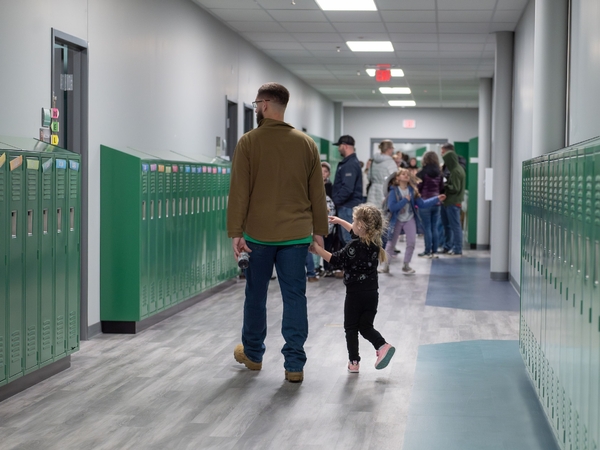
Scripture is clear, God has called fathers and guardians to be the first defenders of truth in their homes. The words of Deuteronomy 6: 6-7 remind us of this weighty responsibility:
“And these words that I command you today shall be on your heart. You shall teach them diligently to your children, and shall talk of them when you sit in your house, and when you walk by the way, and when you lie down, and when you rise.”
Likewise, Proverbs 22:6 gives us both direction and encouragement:
“Train up a child in the way he should go; even when he is old he will not depart from it.”
These verses tell us what it means to lead our families spiritually. But here’s the question: How are we doing in living them out?
Why Fathers Matter on the Frontline
When it comes to the spiritual development of our children, the home is obviously the key ingredient. Research and experience alike tell us that the hours children spend in different environments shape who they are becoming. Consider this stat on waking hours from birth until age 18…
- Hours at church: 2,500
- Hours at school: 17,000
- Hours at home: 84,620
The message is clear — home is the frontline. Fathers and guardians are called to lead, to disciple, and to defend truth in their homes every single day.
Yet, it can be hard to pass on or defend what we don’t fully understand ourselves. That’s why we’re launching a new group called The Frontline, a place for CCS dads and guardians to grow in faith, strengthen their understanding, and step boldly into spiritual leadership.
What is The Frontline?
The Frontline is not a group for experts or professional apologists (though they’re welcome too). It’s a community of ordinary CCS dads who want to be intentional about raising kids who love and follow Jesus.
Here’s what you can expect:
- Led by: Ryan Hyde, CCS Head of School
- Meeting Dates (2025-26): November 18, January 20, February 17, and March 17
- Time & Place: 7:00–8:00 PM @ Calvary
- Commitment: You don’t have to attend every session, but we encourage you to prioritize them.
- Reading: We’ll be working through Mere Christianity by C.S. Lewis. (Free on library apps like Libby and Hoopla, or available for purchase on Amazon.)
- Format: Each meeting will include guided discussion, prayer, and practical encouragement. We’ll share what’s working in our homes, celebrate victories, and learn from one another.
Why Join?
Our goal isn’t only to learn from C.S. Lewis, but also from one another. Together we will:
- Strengthen our faith.
- Grow in confidence to defend truth.
- Build routines that help shape our children’s walk with Christ.
- Encourage one another in the unique challenges of fatherhood.
This is about taking our place on the frontline of our children’s spiritual formation. The church and the school play important roles, but God has entrusted the greatest influence to the home. Let’s rise to the challenge, together. Fathers/Guardians can register in the school app by clicking the tile “Spiritual Formation>The Frontline". Sign up before 11/15!
Calvary Christian Pursuing New Dual Accreditations
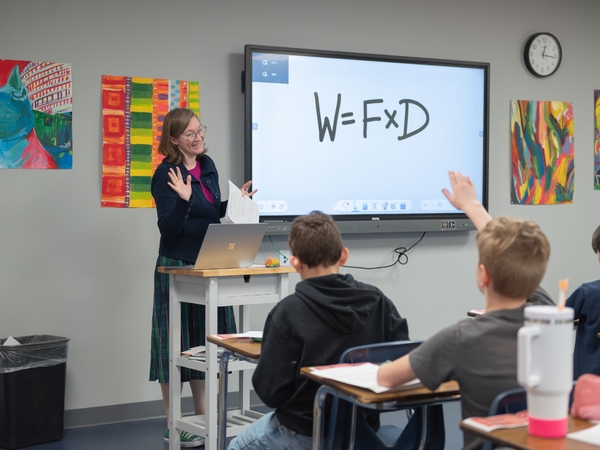
At school, we’re always pursuing growth in the lives of our students, and we want that same push for growth and excellence to permeate through the lives of our staff and organization as a whole. With that in mind, we’re excited to announce that Calvary will begin the journey toward a new dual accreditation with the Association of Christian Schools International (ACSI) and Cognia this fall! This is a significant and time-consuming process that we are choosing to pursue as a strategy to ensure academic excellence, intentional biblical worldview development, and continuous improvement.
Why Accreditation Matters
Accreditation is more than a formal recognition; it's a comprehensive evaluation process that ensures Calvary meets rigorous standards of quality and effectiveness. By pursuing accreditation from both ACSI and Cognia, we aim to pursue excellence in:
- Educational Quality: Adhere to best practices in curriculum, instruction, and assessment.
- Biblical Worldview Development: Integrate a biblical worldview throughout our programs and culture.
- Promote Continuous Improvement: Engage in ongoing self-assessment and refinement of our practices.
- Gain External Validation: Receive recognition from respected accrediting bodies, affirming our commitment to excellence.
What This Means for Our School Community
Embarking on this dual accreditation journey signifies our dedication to providing a high-quality, Christ-centered education. It ensures that we are continually evaluating and improving our practices to better serve our students and families. Accreditation can also enhance our school’s credibility and open doors for further opportunities, such as college admissions and educational partnerships.
Pause and See the Growth: A Challenge to Every Parent

As the school year draws to a close, it's easy to get swept up in the whirlwind of final tests, field days, and end-of-year ceremonies. But in the midst of the chaos, we want to offer you a simple but meaningful challenge: take time to notice how your child has grown this year… and tell them!
From the first day of school last August to now, your child has changed. Not just in shoe size or reading level, but in heart, character, and resilience. These changes are worth discussing and celebrating!
We encourage every parent in the Calvary Christian School family to set aside intentional time this week to have a one-on-one conversation with your child about the growth you've seen in them. If you aren't sure where to start on an intentional conversation like that, you can use the prompts below to help:
- Academic Growth - Have they taken more ownership of their learning? Improved in a difficult subject? Learned how to ask better questions or manage their time more effectively?
- Spiritual Maturity – Have they shown a deeper understanding of God’s Word? Asked hard questions? Made a decision to live more obediently or love more sacrificially?
- Character Development - Have you seen new levels of responsibility, kindness, perseverance, or humility? Have they handled a tough situation better than they might have a year ago?
- Relational Strengths - Have they become a better friend, peacemaker, or teammate? Have they navigated conflict in a more Christlike way?
- Resilience and Grit - Have they pushed through something hard without giving up? Faced failure and gotten back up? Trusted God when it wasn’t easy?
As parents, it’s tempting to always look ahead; what’s next, what’s not yet done, what still needs work. But the gospel reminds us to be people who give thanks, who mark the moments of God’s faithfulness. Your child is not the same person they were nine months ago and that’s a testimony of God's sanctifying work in them.
“Being confident of this, that He who began a good work in you will carry it on to completion until the day of Christ Jesus.” —Philippians 1:6
Why It Matters
When you name the good you see in your child, you’re not just building their confidence, you’re reminding them that their growth matters more than grades or achievements. You’re showing them what it means to “encourage one another and build each other up” (1 Thessalonians 5:11).
And as you speak these truths over your child, you model the love of our Heavenly Father, who delights in our growth and rejoices over every step we take toward maturity in Christ.
How can I start that conversation?
If you’re not sure how to take that first step, here’s a conversation starter!
“I’ve been thinking about how much you’ve grown since school started in August. Can I share a few things I’ve noticed and appreciated about you this year?” Bring a journal. Grab ice cream. Take a walk. Let it be natural, but make it meaningful.
It’s a joy to play a role in our students' growth, and we’re thankful God has called us to this work, and we’re grateful for parents like you!
So pause. Look back. And thank God for the good work He’s doing. We have much to be thankful for!
Hope & A Future
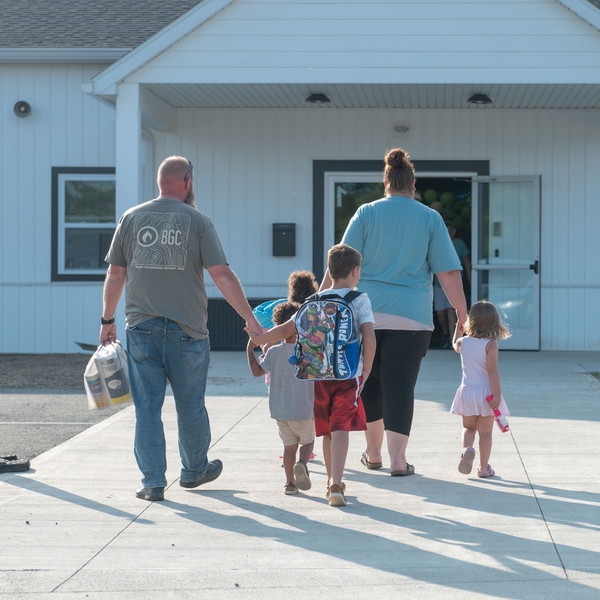
Jeremiah 29:11 says “For I know the plans I have for you,” declares the Lord, “plans to prosper you and not to harm you, plans to give you hope and a future.”
The Center for Christian Virtue (CCV) recently released a new report called the "2025 Hope and A Future" report. This report (authored by Brad Wilcox, Professor of Sociology and Director of the National Marriage Project at the University of Virginia) examines the current state of the American dream, particularly in Ohio. It’s an interesting read and one we wanted to share with you all (link below). The report reveals the negative effects the collapse of the family unit and a decline in marriage have had in Ohio and across America. There’s also an interesting “Family Structure Index” which gives a ranking to all 50 states according to the health of their family culture.
A summary of Wilcox’s report is that he highlights a decline in belief in the American dream, with only one in three U.S. adults feeling it still holds true, (a decrease from half in 2012). This decline is attributed not only to economic factors but also to the deteriorating state of the American family.
In Ohio, the report notes significant challenges: the state ranks third in deaths of despair (suicide, drug overdoses, alcohol poisoning), 15th in child poverty with 17% of children living below the poverty line, and falls in the bottom quintile for hope. Additionally, Ohio stands 29th on the Family Structure Index, which assesses marriage rates, family stability, and fertility.
The report emphasizes the strong correlation between family stability and positive outcomes in education, poverty reduction, child well-being, public safety, and economic mobility. It also raises concerns about declining fertility rates and their potential impact on Ohio's demographic future.
To address these issues, the report suggests a series of public policies and civic measures aimed at strengthening marriage and family life across Ohio. These recommendations are directed towards the legislature, businesses, churches, and families, with the goal of ensuring that every Ohioan has the opportunity to achieve a "better, richer, and happier life" as envisioned in the American dream.
This is another interesting data set which reinforces something we already know…the family unit is very important! While it’s not a surprise to see data supporting the fact that a life aligned with God’s word is good (and leads to more desirable outcomes!), it’s a stark reminder of the consequences of a life that isn’t. Our mission here is to support that key role our families have, so we want to leave you with some practical steps to keep leading intentionally in your home!
1. Family Devotions: Set aside time each day to read Scripture together, discuss its meaning, and pray as a family. This could be a morning ritual, during dinner, or before bedtime. Our staff have added monthly devotional plans your family can use in the Calvary app if you aren’t sure where to start. You’ll be able to find annual plans and monthly devotional plans that we recommend.
2. Model Prayer: Pray regularly with your children! Not just in times of need, but in moments of gratitude and joy. Let them hear you pray for them, their futures, and God’s guidance in their lives.
3. Intentional Conversations: Use everyday moments to point back to God’s truth. Whether it’s discussing a challenge at school or talking about current events, lead the conversation towards a biblical perspective.
4. Church Involvement: Regular church attendance as a family is crucial. Show your children the importance of being part of a community of believers and serve together in your church. From time to time, we’ll hear frustrations about church, which may include serving with challenging people, disagreements over a church policy, or differences in preferred style of worship. The main point here is that the church has been established by God as His way for us to be connected and further our walk with Him. It’s simply our job to be obedient to scripture!
5. Personal Growth: The most powerful way to disciple your children is to live out your own faith authentically. Children will see this!
View the CCV “Hope & A Future” report here → Family Structure Index | CCV
Chasing Trophies

Like most of America, our family watched the recent Super Bowl (even though we don’t like either of the teams in it…Go Browns). Winning that game, of course, is the pinnacle of success in the football world, the ultimate dream realized. But time and again, the quarterbacks who reach that mountaintop have admitted that the victory, fame, and the championship ring didn’t bring them the fulfillment they thought it would.
It's interesting to hear people like Tom Brady from years past, after winning multiple Super Bowls, who famously said in a 60 Minutes interview:
"Why do I have three Super Bowl rings and still think there’s something greater out there for me? I mean, maybe a lot of people would say, ‘Hey man, this is what it is. I reached my goal, my dream, my life.’ Me, I think, ‘God, it’s gotta be more than this.’"
Kurt Warner, another Super Bowl champion, shared a similar sentiment:
"You think that if you accomplish something, if you reach a certain status, then you will finally be fulfilled. But I realized that success on the field wasn’t going to bring me the purpose and meaning I was looking for—that only came through my relationship with Jesus."
These words from the best in the game remind us of a powerful truth: earthly achievements, no matter how great, can never fill the God-shaped void in our hearts.
It’s a good reminder to make sure we are budgeting our time towards priorities that have an eternal impact. We’re blessed to have that very privilege as we help students cultivate a personal relationship with Jesus Christ. The world constantly tells us that success, trophies, and accolades will bring us lasting joy. But we know that true fulfillment comes only from knowing Christ.
Paul put it this way in Philippians 3:8:
"Indeed, I count everything as loss because of the surpassing worth of knowing Christ Jesus my Lord. For His sake I have suffered the loss of all things and count them as rubbish, in order that I may gain Christ."
We love academics, athletics, clubs, art, and achievements from any endeavor. They are gifts from God. But the achievements themselves cannot be the primary goal. Our co-mission between our school and your family is to shape these students into young men and women who see their worth not in what they accomplish, but in who they are in Christ.
My encouragement is to use this example as a conversation starter with your child this week. Ask them about their goals. Maybe they’ve never thought about setting goals before! What do they want to achieve this year? Maybe a few years from now? Maybe by the end of their high school career? Is it something academic focused? Club focused? A goal towards a certain spiritual discipline? What do they hope that achievement brings them? That can be a great conversation and an important reminder for these students that Jesus wants our hearts. He wants us to be a light for Him in our sphere of influence (whatever it is we are doing), and He cares about our journey as we follow Him; not just the achievements that may come as a result of our work!
As parents, educators, and leaders, we get to invest in something far greater than trophies. We are shaping hearts and minds for eternity. And that’s worth far more than any Super Bowl ring.
So as we watch the big games and celebrate the incredible athletic achievements on display, let’s remember: the greatest victory has already been won, not on a field, but on the cross.
And that victory in Christ is the only one that truly satisfies.
Research Emphasizes the Importance of Family Devotions

Parenting is both a privilege and a responsibility, especially when it comes to the spiritual formation of children. At Calvary, we believe the home is the primary place where a child’s faith is nurtured and developed. Yet, recent research highlights the challenges parents face in successfully passing down their beliefs to the next generation.
A study by Francis, Fawcett, and McKenna found that only half of a parent's religiosity is successfully transmitted to their children. Even more sobering is the statistic that when only one parent is a believer, the likelihood of passing down their faith drops to just 22%. These numbers remind us of the importance of an intentional and unified effort in nurturing faith at home.
Unfortunately, family devotion time has become less common than in previous generations. This decline has significant implications for the relational and spiritual dynamics of the family. Research conducted by ACSI reveals that families who prioritize devotion time together experience notable benefits:
- A 15% increase in children feeling comfortable talking to their parents about faith.
- A 20% increase in families spending quality time together.
- A 12% increase in parents being willing to discuss anything with their children.
These findings reinforce what Scripture teaches about the importance of intentional time spent in worship, prayer, and conversation within the family unit. Significantly, studies show that the specific materials used during family devotion time are less important than the habits themselves. Simply reading the Bible together and praying as a family have the most enduring impact on children’s spiritual growth.
As parents, your role in shaping your children’s biblical worldview cannot be overstated. More than anyone else, you have the opportunity and responsibility to model and instill faith in your children. We exist to partner with you in this eternally significant work! While our programs and teaching aim to reinforce a biblical worldview and truth, the home is where these values must be cultivated and lived out daily.
We encourage you to prioritize family devotion time, no matter how simple it might be. If you need a starting point, head over to the CCS app and click on the family devotion tile. There you’ll find monthly and annual devotionals to support your family devotion routine. Your intentionality will not only shape your children’s faith but also strengthen your family relationships in profound ways. Let’s continue the work to teach truth and prepare disciples!
Spiritual Formation Starts at Home: The Role of Parents in Discipleship

At Calvary Christian School, we believe spiritual formation begins long before a child steps into the classroom. It starts in the home, where parents are called to be the primary spiritual guides for their children. The Bible clearly emphasizes the responsibility parents have to disciple their kids, nurturing them to grow in faith, wisdom, and love for the Lord.
Biblical Foundations for Parental Discipleship
In Deuteronomy 5, Moses is given the ten commandments and in the following chapter, God commands us to keep His law and Word always before us, saying, "These commandments that I give you today are to be on your hearts. Impress them on your children. Talk about them when you sit at home and when you walk along the road, when you lie down and when you get up."
This passage reminds me that discipleship is not a one-time event but an ongoing process that is supposed to be a part of daily life. Parents should see the opportunity to use conversations at the dinner table, bedtime routine, time spent hanging around McKinley Fields to share God’s truth and model a Christ-centered life. This doesn’t have to be a sermon! It can be as simple as recognizing the beautiful day that God has given us or being thankful for the health and energy we have to run around a soccer field.
Similarly, Ephesians 6:4 speaks directly to fathers, urging them to take an active role:
"Fathers, do not provoke your children to anger, but bring them up in the discipline and instruction of the Lord."
This verse is one that highlights the unique role of fathers in shaping the spiritual direction of their children. Research supports this biblical truth. Studies show that when fathers take the lead in spiritual matters, the impact on their children’s faith is profound. In families where the father is a committed Christian and actively leads in faith, approximately 75% (and maybe an even a higher number depending on which study you look at) of the children continue to walk with the Lord into adulthood. This is compared to only about 15% when the father is disengaged spiritually. Wow! A 60% increase simply from the father taking an active role in their child’s spiritual development? What an opportunity!
Practical Steps for Parents
So how can parents, especially fathers, actively disciple their children at home? Here are a few practical ideas: This does not have to be intimidating!
Family Devotions: Set aside time each day to read Scripture together, discuss its meaning, and pray as a family. This could be a morning ritual, during dinner, or before bedtime. Our staff have added monthly devotional plans your family can use in the Calvary app if you aren’t sure where to start. You’ll be able to find annual plans and monthly devotional plans that we recommend.
Model Prayer: Pray regularly with your children! Not just in times of need, but in moments of gratitude and joy. Let them hear you pray for them, their futures, and God’s guidance in their lives.
Intentional Conversations: Use everyday moments to point back to God’s truth. Whether it’s discussing a challenge at school or talking about current events, lead the conversation toward a biblical perspective.
Church Involvement: Regular church attendance as a family is crucial. Show your children the importance of being part of a community of believers, and serve together in your church. From time to time, we’ll hear frustrations about church, which may include serving with challenging people, disagreements over a church policy, or differences in preferred style of worship. The main point here is that the church has been established by God as His way for us to be connected and further our walk with Him. It’s simply our job to be obedient to scripture!
Personal Growth: The most powerful way to disciple your children is to live out your own faith authentically. Children will see this!
Partnering with Parents
At Calvary Christian School, we understand the vital role parents play in the spiritual formation of their children, and we want you to understand it too! Our goal is to come alongside you, provide biblical instruction, support for your home, a nurturing environment, and a Christian community to reinforce the biblical values taught at home. As parents, you have the primary role to disciple your children. We are passionate about seeing young minds turned towards Jesus as they grow not only in academic areas but more importantly in their walk with the Lord. People often talk about future society with fear, frequently worried about the direction the world is heading. We can say on the flipside that we see 500 students currently being rooted in God’s Word every day and will someday soon take that light to Logan county, our state, and our country to shine brightly for Jesus, impacting those around them as well. Now that’s an exciting future!
Why is Worldview so Important Anyways? A look at our Portrait of a Graduate: Biblical Worldview

It’s a sad story that we’ve heard too frequently. A young person who grew up in a Christian home attends a public university or community college and 4 short years later returns home with a completely different thought process and approach to the world around them. The biblical foundation that had been nurtured at home has been under constant attack while secular philosophies have taken its place. It’s for this reason that it’s so crucial for students to take their time in K-12 education to develop a deeply rooted Biblical approach to the world around us.
So let’s start by taking a brief look at eight of the secular philosophies that surround us today.
Humanism: Humanism is a philosophy that places human beings at the center of meaning and morality. Humanists believe that human beings are capable of morality and self-fulfillment without relying on divine intervention or religious doctrines.
Relativism: Relativism teaches that truth and morality are subjective and can vary based on culture, personal experience, or individual belief. According to relativism, there is no absolute right or wrong; what is considered moral or true depends on individual or societal preferences. This philosophy is often seen in statements like "what’s true for you may not be true for me." (Does this sound like the time of the Judges? They did what was right in their own eyes!)
Materialism: Materialism is the belief that the physical world is the only reality, and anything that exists must be measurable by scientific means. It denies the existence of anything spiritual or supernatural. This worldview often reduces human experiences like consciousness, emotions, and morality to mere chemical or physical processes in the brain.
Naturalism: Closely related to materialism, naturalism holds that everything can be explained by natural causes and laws, without the need for supernatural explanations. In education and science, naturalism often promotes a strictly evolutionary, non-theistic view of the world, rejecting any spiritual or divine aspects of reality.
Postmodernism: Postmodernism argues that there is no single, overarching truth or narrative that can explain reality. Instead, it promotes skepticism of any universal truths, favoring multiple perspectives and interpretations. Postmodernists often challenge traditional beliefs, including religious and moral absolutes, and advocate for deconstructing established narratives.
Secularism: Secularism is the principle of separating religion from civic affairs and government. While this can refer to maintaining religious neutrality in public institutions, it also has evolved into a worldview that prioritizes human reason and empirical science over religious or spiritual considerations, particularly in public policy, education, and culture.
Existentialism: Existentialism focuses on individual freedom, choice, and personal responsibility. It teaches that life has no inherent meaning, and it’s up to each person to create their own meaning through their choices and actions. While existentialism can be either religious or secular, the secular version tends to emphasize human autonomy without divine purpose or guidance.
Hedonism: Hedonism is the belief that pleasure or personal happiness is the highest good and ultimate aim in life.
Whether you’ve recognized it or not, the above philosophies are ingrained into different aspects of the secular thought process in our society, especially education. This highlights the importance of building a biblical worldview!
So what then defines a biblical worldview? A biblical worldview is a way of interpreting and understanding the world through the lens of Scripture. It is based on the belief that the Bible is the infallible, inspired Word of God and serves as the ultimate authority for truth, morality, and the nature of reality. This worldview sees all aspects of life through the principles and teachings found in the Bible.
Key components of a biblical worldview include:
God as Creator and Sovereign: A biblical worldview starts with the belief that God is the Creator of the universe (Genesis 1:1) and has ultimate authority over all creation (Psalm 24:1). He sustains and governs everything, and nothing happens outside of His will and purpose.
Humanity's Purpose: Humans are created in the image of God (Genesis 1:27) with inherent dignity and value. Our primary purpose is to glorify God and enjoy a relationship with Him (Isaiah 43:7). Life’s meaning is found in serving and loving God, not in personal fulfillment or earthly achievements.
The Fall and Sin: A biblical worldview recognizes that the world is fallen due to human sin (Romans 3:23). This fall has affected every aspect of creation, including human nature, relationships, and the environment. As a result, humanity is in need of redemption.
Jesus Christ as Savior: Central to a biblical worldview is the belief that salvation comes only through faith in Jesus Christ (John 14:6). Christ’s death and resurrection provide redemption from sin and offer the hope of eternal life (Romans 6:23). The gospel transforms lives, giving Christians new identities as children of God (2 Corinthians 5:17).
The Authority of Scripture: The Bible is the inspired and authoritative Word of God (2 Timothy 3:16-17). It provides guidance on how to live, think, and understand reality.
Moral Absolutes: A biblical worldview upholds that moral truths are objective and rooted in God’s nature and commands. Right and wrong are not subjective or relative but are defined by God’s standards (Exodus 20:1-17, Matthew 22:37-40).
Humanity's Role in the World: Christians are called to live as ambassadors of Christ in the world (2 Corinthians 5:20). This means engaging in culture, work, and relationships in a way that reflects God’s kingdom values and purpose.
Eternal Perspective: A biblical worldview includes an understanding that life on earth is temporary, and believers are to live with an eternal perspective (Colossians 3:1-2). The reality of heaven and Christ’s return shapes how we view suffering, success, and our ultimate purpose.
What a difference between the secular set of philosophies and a Biblical worldview! This is why at Calvary Christian School, one of the most vital characteristics in our Portrait of a Graduate is the commitment to developing a biblical worldview in our students. This goes beyond simply teaching them to follow rules or adhere to guidelines. Our goal is to nurture students who see the world through the lens of scripture with hearts that are truly transformed, reflecting a deep relationship with Christ, a change that only comes through the work of the Holy Spirit.
All forms of education are taught from a worldview, whether acknowledged or not. In public education, you’ll follow the top list to see the foundation for which the curriculum is built on, it will be grounded in humanism and relativism. In contrast, at Calvary Christian School, the foundation for everything we do is the only true cornerstone, the direct Word of God. We see science, history, and literature not as neutral subjects but as fields that reflect the beauty, order, and sovereignty of the Creator. Colossians 2:8 warns us, “See to it that no one takes you captive through hollow and deceptive philosophy, which depends on human tradition and the elemental spiritual forces of this world rather than on Christ.” We stand firm in teaching students to view the world around them through the truth of Scripture, enabling them to discern truth from falsehood.
Our commitment to a biblical worldview is foundational in developing graduates who are equipped not only to understand the world but to participate in it, with wisdom and conviction. These students have the ability to observe and engage with society through a filter that aligns with God’s Word. They are equipped to evaluate cultural, moral, and spiritual matters in light of biblical principles, which will guide their decisions and actions as they grow into adulthood.
In a world where secular values increasingly influence every aspect of life, our desire is to disciple students who see the world through a biblical lens, shaped by the truth of Scripture and led by the Holy Spirit. This vision for our graduates is not simply about academic success but about cultivating hearts that reflect Christ and minds that are fully anchored in His truth.
Developing Grit: Pursuing Calvary’s Portrait of a Graduate

Growth is a universal desire. We all want to see it in our lives and in our children’s lives. Yet, as we all know, growth never comes without struggle. It’s in the moments of challenge, frustration, and difficulty that growth occurs. Just as a seed pushes its way through the soil to reach sunlight, so too must we endure hardship to experience genuine growth.
The Science of Struggle: The Myelin Sheath
In the world of neuroscience, there’s a process that beautifully illustrates the necessity of struggle in growth. God designed our brains with billions of neurons that communicate with each other. These signals travel along pathways insulated by a substance we call the myelin sheath. The more we practice a skill, the thicker the myelin sheath becomes around the neural pathways, making the skill easier to perform. However, this process doesn’t happen overnight. It requires constant practice, repeated effort, and yes, struggle! Just as an athlete must endure hours of focused training to improve, our students must embrace grit to push through academic challenges to build the "myelin" that will enable them to master new skills. The apostle Paul gives us our motivation for our hard work in Colossians 3:23-24. He says to “work heartily, as for the Lord and not for men, knowing that from the Lord you will receive the inheritance as your reward. You are serving the Lord Christ.” Our desire for growth and skill development is ultimately a reflection of wanting to build the traits and talents that God has blessed us with; and we in turn want to use those abilities to glorify Him.
The Butterfly’s Struggle
Another example of grit producing transformational change in God’s creation is the butterfly. The caterpillar must fight its way out of the cocoon, struggling with all its might. We might be tempted to help, to break the cocoon and free the butterfly, but doing so would rob the butterfly of the strength it needs to fly. The struggle is necessary for its wings to develop the power required for flight. This beautifully represents the growth we want to see in our children. As much as we wish to remove their struggles, we must recognize that these very challenges are what prepare them for the future. The struggle is not a sign of failure but a critical part of their development.
Grit: Calvary’s Portrait of a Graduate
At Calvary Christian, one of the core characteristics in our "Portrait of a Graduate" is grit. Grit is the resolve to push through difficulties, to keep going when the going gets tough. This trait is not just about academic resilience; it’s about developing the character to persevere in faith, even when life’s challenges seem overwhelming. James 1:2-4 says, "Consider it pure joy, my brothers and sisters, whenever you face trials of many kinds, because you know that the testing of your faith produces perseverance. Let perseverance finish its work so that you may be mature and complete, not lacking anything."
Encouraging Families Through the Struggles
It’s important to remember that growth is a process, often marked by moments of difficulty. Here are three ways you can support your students as they encounter seasons of struggle:
Be Patient and Encouraging: Growth takes time! When your child is facing academic or personal challenges, remind them that it’s okay to struggle. Encourage them by celebrating small victories along the way. Galatians 6:9 reminds us, “Let us not become weary in doing good, for at the proper time we will reap a harvest if we do not give up.”
Model Perseverance: Our children learn more from our actions! When you encounter your own challenges, model perseverance and faith. Show them how you rely on God during tough times. Proverbs 3:5-6 says, “Trust in the Lord with all your heart and lean not on your own understanding; in all your ways submit to him, and he will make your paths straight.”
Pray Together: There is power in prayer! When struggles arise, take time to pray with your children. Ask God for strength, wisdom, and perseverance. Philippians 4:6-7 encourages us, “Do not be anxious about anything, but in every situation, by prayer and petition, with thanksgiving, present your requests to God. And the peace of God, which transcends all understanding, will guard your hearts and your minds in Christ Jesus.”
Cultivating Growth: A Greenhouse Instead of a Shelter

As partners in discipleship, our goal to transform student lives through Jesus Christ in a world that’s running the other direction is full of challenges! It can be tempting to want to shield them completely from external influences. Calvary is not designed to simply be a shelter that blocks out the world, but a greenhouse that nurtures growth over time while allowing students to form deep roots in God’s Word as they grow in their understanding of a Biblical worldview.
The Shelter
If we think about a shelter, while protective, by definition is isolated from the outside world. It creates a barrier between them and any potentially harmful influences, but this can also prevent them from developing the resilience, discernment, and wisdom needed to navigate life beyond our doors. As they eventually step out into adulthood, the sudden exposure to the world can be challenging, like a fragile plant abruptly placed in harsh conditions.
The Bible reminds us that while we are "not of the world," we are sent "into the world" (John 17:14-18). Jesus prayed not for His disciples to be removed from the world, but for their protection and sanctification as they remained in it. It’s not possible nor desirable to be completely sheltered to the world, but a safe place to grow deep roots is essential while critical worldviews are being formed.
The Greenhouse
A greenhouse, on the other hand, creates an environment where plants can flourish. It provides sunlight, water, and warmth; elements essential for growth, while still protecting young plants from harsh winds and cold. The greenhouse doesn’t shut out the world; it provides the proper environment for what’s growing inside to truly flourish in time.
In the same way, Calvary strives to provide an environment where students can be exposed to challenges while still under the nurturing care of godly teachers and supportive parents. Proverbs 22:6 instructs us to "train up a child in the way he should go, and when he is old he will not depart from it." The greenhouse approach aligns with this principle, allowing roots to grow like an anchor while students are being grounded in biblical truth. Rather than merely shielding our students, we aim to equip them with the tools they need to engage with secular culture in a biblical manner. Ephesians 6:10-18 speaks of putting on the full armor of God so we can stand firm. Just as a plant in a greenhouse grows stronger through carefully measured exposure to the elements, our students grow stronger in faith, character, and wisdom as their roots deepen in God’s Word. We want to foster young believers who are firmly rooted in the Word of God and ready to stand strong, living as "salt and light" (Matthew 5:13-16). Our role is to nurture this growth through Christian education in a way that protects and prepares, discipling our students to become witnesses for Christ in whatever environment they are placed in.
In our greenhouse, students can safely practice using the biblical tools they’ve been given. They will learn how to discern truth from falsehood, respond to challenges with grace, and stand firm in their faith while being compassionate and wise in their interactions with the world.