

Why Christian Education Matters More Than Ever
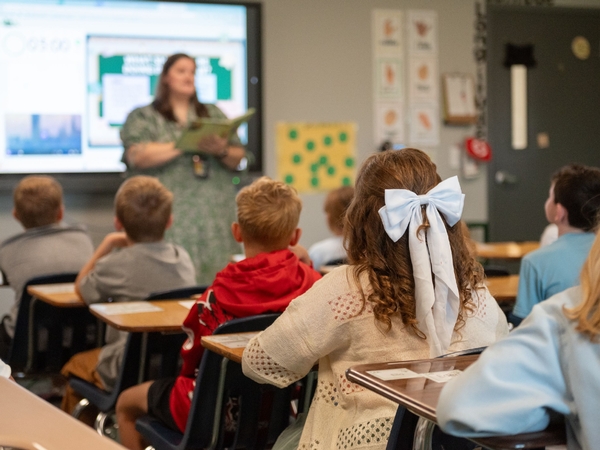
When parents ask whether their child is receiving a good education, they usually begin with questions such as “Are the teachers effective? Is the curriculum challenging? Is my child prepared for college, work, and adult life?” Christian parents should add one more important question to that list… What kind of person is this education helping my child become? Education is more than a simple transfer of knowledge. It shapes what students believe is true, what they learn to love, and how they understand the purpose of their lives.
No education is spiritually neutral. Every curriculum and classroom rests on assumptions about human beings, truth, morality, and meaning. A history lesson communicates something about justice and human nature. A science lesson reflects beliefs about creation, knowledge, and responsibility. Literature invites students to consider what makes a life good or tragic. Even when God is not mentioned, students are still receiving answers to life’s most important questions.
Christian education begins with a different foundation; Abraham Kuyper’s famous quote is applicable here… “There is not a square inch in the whole domain of our human existence over which Christ, who is Sovereign over all, does not cry “Mine!”. We could also point to Psalm 24:1, where we are taught that “The earth is the Lord’s and everything in it." Mathematics reveals order. Science explores a world created and sustained by God. Literature gives us opportunities to examine human dignity, sin, longing, sacrifice, and redemption. History shows both the consequences of human brokenness and the ways people can act with courage and faithfulness. Biblical truth is not an accessory added to an otherwise complete education; it is the framework that helps these pieces fit together.
This does not mean Christian schools are perfect or that Christian students never struggle. It means we are honest about the direction of our work. We want students to become knowledgeable, but also wise; capable, but also humble; confident, but also dependent on God. We want them prepared to enter the world, not afraid of it and certainly not absorbed by it. Our work is to encourage and develop thoughtful disciples who can recognize truth, love their neighbors, and use their gifts in service.
At Calvary, that formation happens through thousands of ordinary moments: a teacher connecting content to God’s character, a coach correcting selfishness, a class praying for someone who is hurting, or a student learning to persevere through difficult work. No single moment accomplishes the mission. Together, these experiences establish patterns of thought, affection, and action.
Parents remain the primary human influence in a child’s life. The school is not a replacement for the home or the church; we are your partners. One simple practice is to ask more than, “What did you learn today?” Try asking, “What did today’s lessons show you about God, people, or creation?” That question better helps children connect their learning to their discipleship.
Choosing Christian education is ultimately an intentional decision about formation. It is a commitment to surround academic excellence with biblical truth, meaningful relationships, and a coherent vision of human flourishing. In a culture filled with competing stories about identity, freedom, and success, that partnership matters more than ever.